As one of the world’s most influential markets for anime, toys, character IP and collectibles culture, Japan has long played an important role in the development of the global designer toy and collectibles industry.
From its longstanding traditions in anime character culture and model collecting to the continued evolution of figures, sofubi, designer toys and other collectible categories, Japan has cultivated numerous IPs with global influence while developing a mature and highly diverse collectibles ecosystem.
For collectors around the world, Japan is not only a destination for discovering the latest releases, but also an important market for finding classic pieces, limited editions, rare collectibles and pre-owned items.
In Japan, the market journey of a collectible often does not end with its first sale.
New products continue to enter the market, established IPs continue to evolve, and items that are no longer available through primary retail channels can continue circulating through the secondary market, where they may be discovered by a new generation of collectors.
As the global market for designer toys, blind boxes and collectibles continues to evolve, the way collectors think about “buying” is changing as well.
Today, purchasing a collectible does not necessarily mark the end of its journey.
Some collectors choose to keep their items for the long term. Others sell pieces as their collecting interests change, while some trade items in search of their next desired addition. For an increasing number of collectors, collecting has become an ongoing process of discovery, selection and circulation.
Against this backdrop, the SWAPBOXO team traveled to Tokyo, Japan, from August 23 to 26 to conduct an on-the-ground study of the local designer toy, anime, model and secondary collectibles markets.
During the four-day visit, the team explored several of Tokyo’s most representative collecting and consumer districts, including Akihabara, Nakano, Shibuya and Harajuku. The itinerary included visits to Suruga-ya Anime & Hobby Store, Radio Kaikan, AmiAmi Akihabara, Kotobukiya, Nakano Broadway, Mandarake Shibuya, Lashinbang Shibuya, POP MART Harajuku Store, Kiddy Land and SPIRAL—a diverse range of collectibles retailers, commercial landmarks and cultural spaces.
For SWAPBOXO, the trip was more than a simple industry visit. It was an opportunity to gain a closer understanding of how Japan’s mature collectibles market operates and to observe how primary retail and secondary-market circulation can develop alongside one another.
Why Japan?
Japan has a deep-rooted foundation in anime, toys and character culture.
From traditional toys aimed at children to models, figures and collectibles designed for adult consumers, the Japanese market serves a highly diverse range of collecting communities.
Collectors of different ages, budgets and interests can all find products suited to their individual preferences.
What is particularly noteworthy is that Japan’s collecting culture is not centered solely on the latest releases.
Products launched many years ago can continue to be sought after, traded and collected.
Some consumers pursue the newest series, while others search specifically for discontinued or hard-to-find items. Some collect complete sets, while others focus on a single character or a particular edition.
As a result, within Japan’s mature collectibles ecosystem, the primary and secondary markets are not two entirely separate worlds.
New releases continue to introduce fresh demand and attract new collectors, while the secondary market enables previously owned items to remain in circulation.
When one collector sells an item they no longer wish to keep, another may discover a collectible they have been searching for.
This continuous circulation can extend the market life of collectibles and create additional opportunities for products to reach new collectors.
These were among the key questions SWAPBOXO sought to explore through its on-the-ground research:
As collecting culture matures, how can a market enable collectibles to remain in circulation?
How do buyers, sellers, retailers and different transaction channels come together to form a broader collectibles ecosystem?
Over the four-day visit, the SWAPBOXO team explored several of Japan’s most representative collecting districts and market environments.
From primary retail to secondary-market trading, and from contemporary IPs to classic collectibles, the team examined these diverse market spaces to gain a closer perspective on the breadth of Japan’s collectibles market and the practices that may offer valuable insights for the industry.
Akihabara: When Collecting Becomes a Complete Consumer Ecosystem
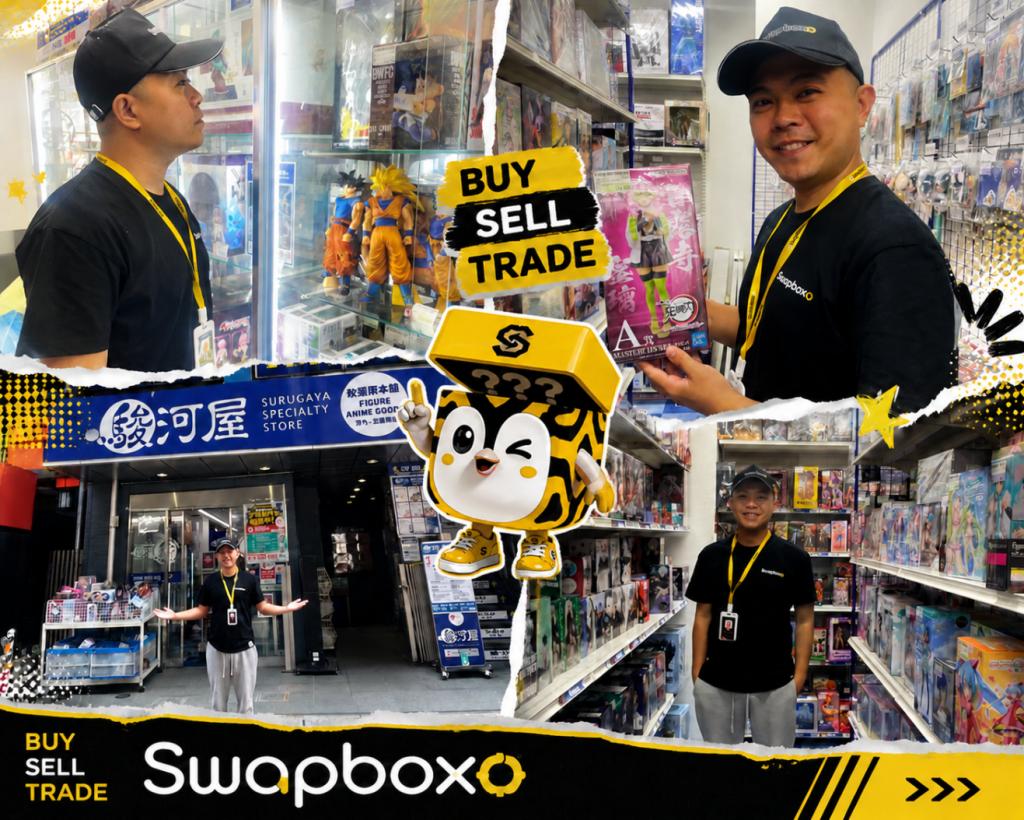
Akihabara is one of Tokyo’s most representative destinations for anime, gaming, models and collectibles culture.
A walk through the district quickly reveals that collectibles are not confined to a single retail category.
Figures, models, trading cards, anime merchandise, pre-owned toys, limited-edition products and IP merchandise from different eras together form a highly diverse consumer ecosystem.
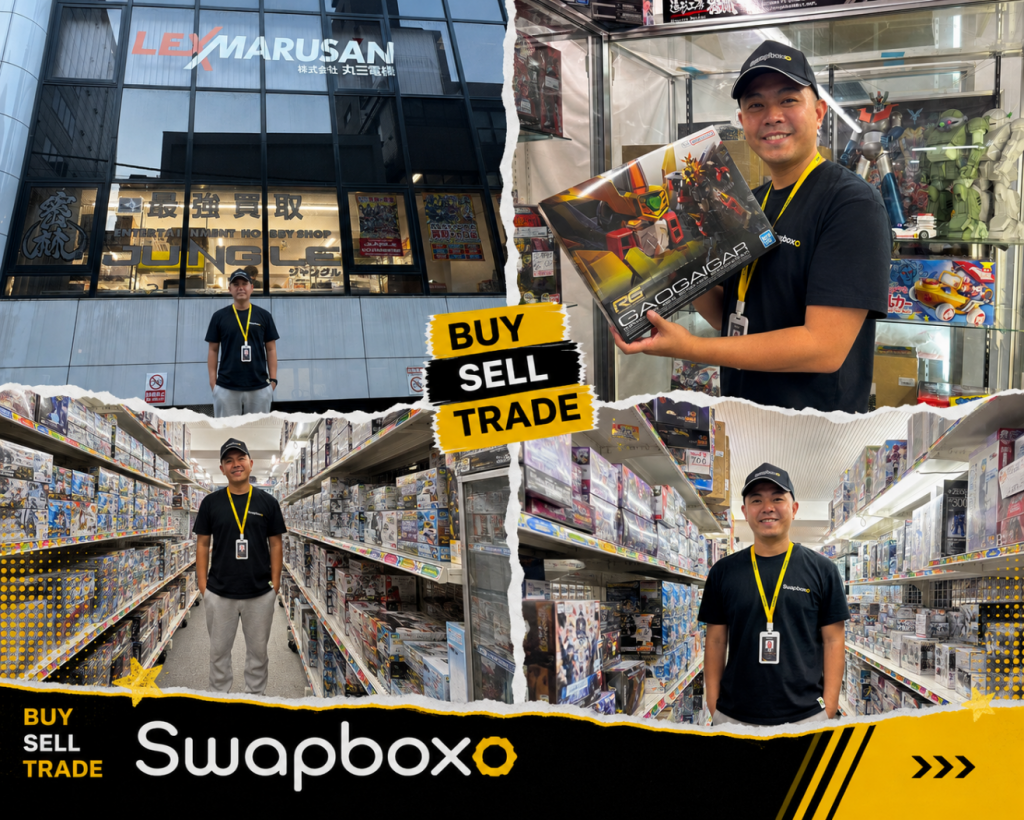
During the visit, the SWAPBOXO team focused on Suruga-ya Anime & Hobby Store, Radio Kaikan, AmiAmi Akihabara and Kotobukiya.
Across these different retail environments, the team observed the depth of product segmentation within Japan’s collectibles market.
From new releases and limited editions to pre-owned items and rare collectibles, consumers can explore options based on their budgets, interests and stage of collecting.
This also raised an important question for the team: a mature collectibles market is not simply one with more products, but one in which items with different conditions, price points and levels of rarity can continue to find new collectors.
Particularly in the secondary market, a collectible that has already been purchased can still retain the potential for further circulation.
Condition, completeness, edition, market demand and pricing all become important factors in the decision-making process.
For SWAPBOXO, whose platform is built around the concept of BUY. SELL. TRADE., this market dynamic further reinforces the importance of enabling collectibles to continue circulating after their initial purchase—whether through resale, re-collection or exchange.
Radio Kaikan: A Space Where Collectors Can Continue Discovering New Options
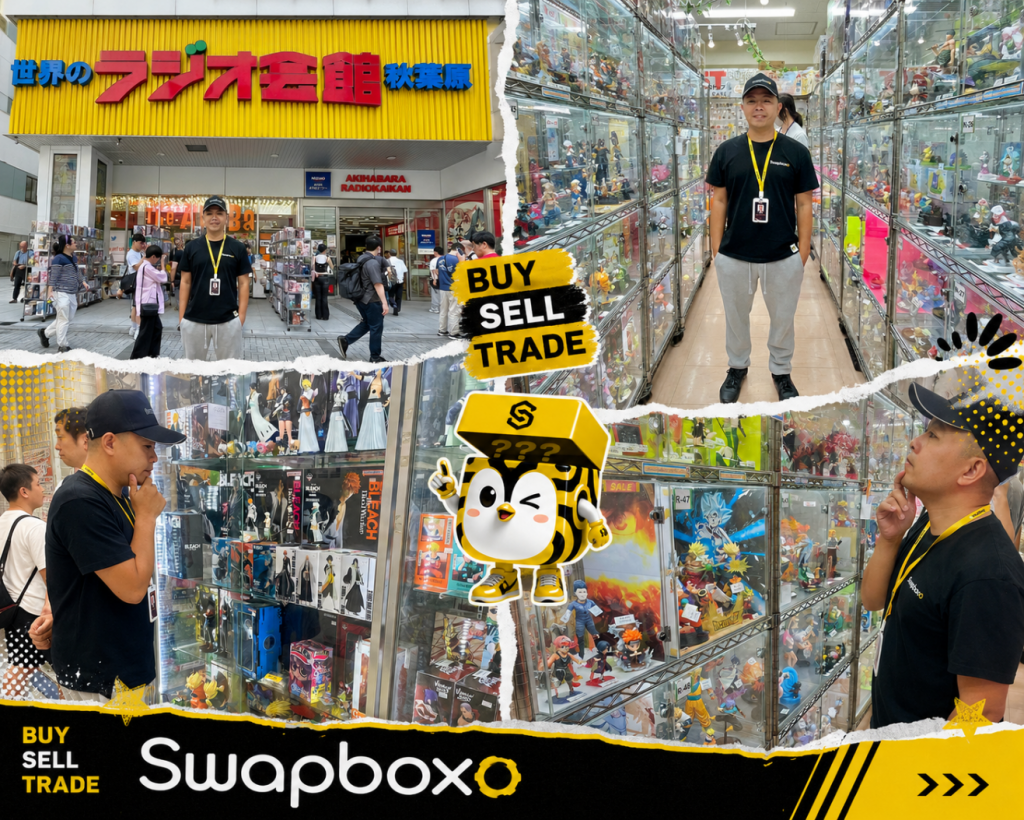
As one of Akihabara’s most recognizable commercial landmarks for collectors, Radio Kaikan represents more than the business model of a single retailer.
Instead, it brings together multiple collectible categories, different merchants and a wide range of consumer needs within the same commercial environment.
For collectors, every floor and every store can present a new opportunity for discovery.
Some are searching for the latest releases. Others compare prices across different retailers. Some are specifically looking for older items that are no longer in production.
This process of continuous discovery and comparison is one of the characteristics that distinguishes the collectibles market from more conventional retail categories.
Collectors do not necessarily make a purchase simply because they see an item.
They may continue comparing prices, editions, product conditions and other available options before making a decision.
For this reason, making more choices easier to discover is, in itself, an important part of the value created within a collectibles marketplace.
The visit also encouraged the SWAPBOXO team to further consider how platforms can help users access more comparable listings, gain clearer market references and make decisions based on options that better match their individual needs.
AmiAmi and Kotobukiya: How IP Value Extends Beyond a Single Product Release
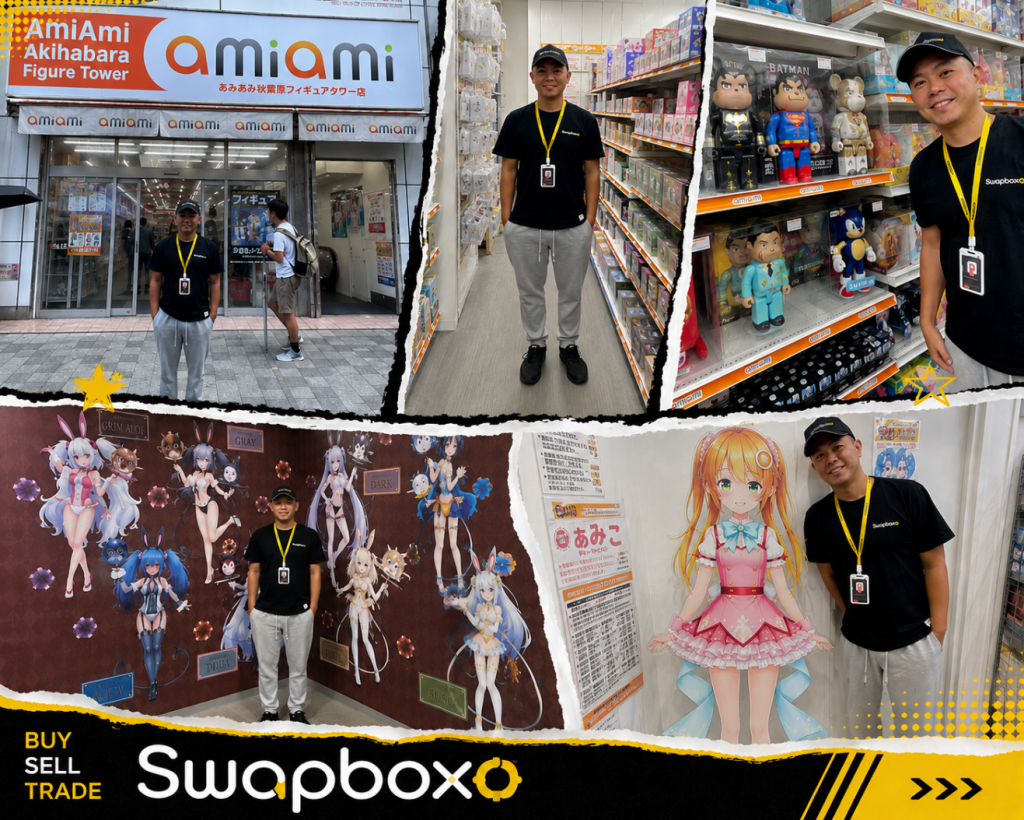
At AmiAmi Akihabara and Kotobukiya, the team observed a clear characteristic of IP-driven collecting:
The lifecycle of an IP extends far beyond a single product release.
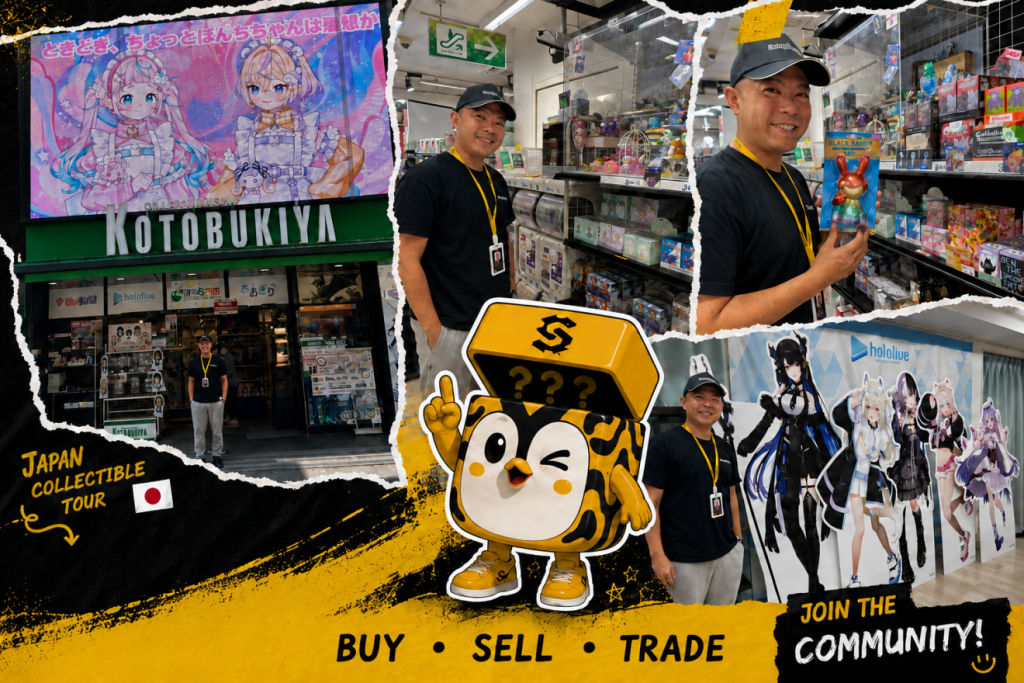
A successful IP can remain present in collectors’ lives through different characters, scales, product lines and formats.
As a result, consumer purchasing behavior also becomes increasingly diverse.
Some collectors focus on a single character. Others seek limited editions, while some continuously refine their collections as their interests evolve.
This means that collecting is not a one-time destination, but an evolving, long-term process.
An item that a collector values today may remain in their collection for years. Duplicate pieces may later be sold, while changes in collecting interests may lead other items to be traded and rediscovered by new owners.
The value of a collectible is not reflected only at the moment of its first purchase, but also in its potential to remain discoverable within the market over time.
This is one of the reasons SWAPBOXO continues to focus on the development of the secondary collectibles market.
Nakano Broadway: Another Dimension of the Secondary Collectibles Market
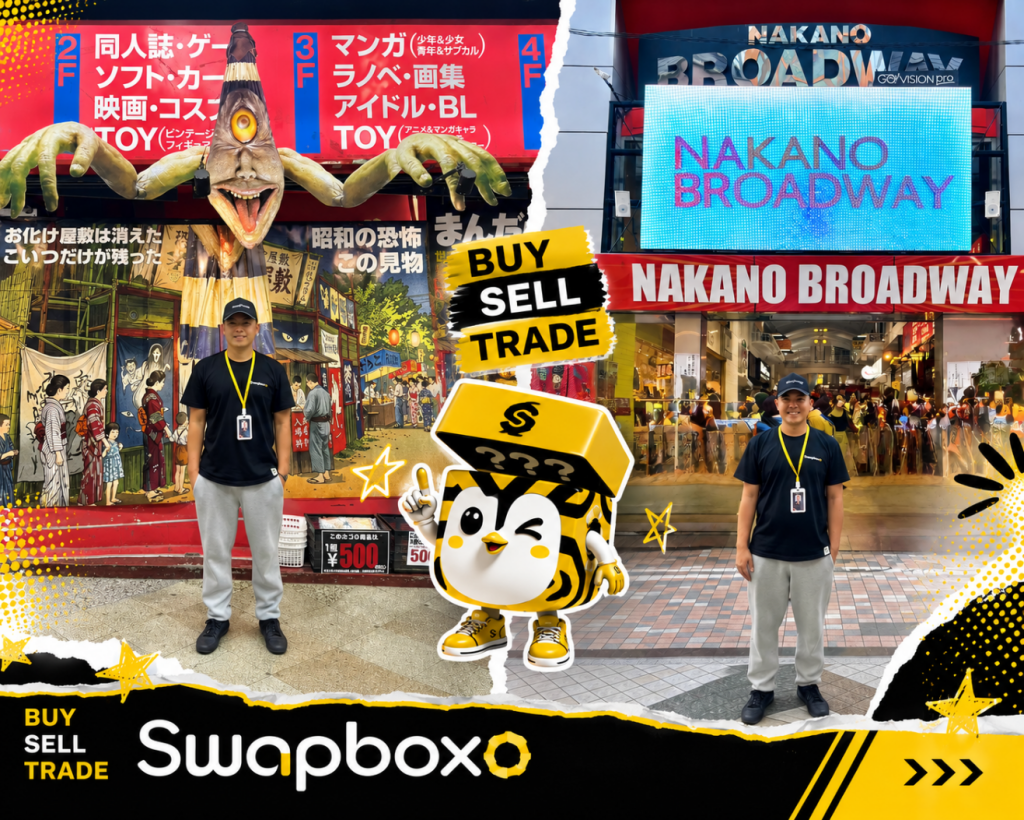
If Akihabara demonstrates the concentration of Japan’s anime and model industries, Nakano Broadway offers a different perspective on the depth and diversity of the secondary collectibles market.
The area brings together a wide range of stores associated with anime, manga, toys, figures and other collectible categories.
Products from different eras, IPs and levels of rarity coexist within the same market environment.
Some collectibles that are no longer easily available through conventional primary retail channels can still be rediscovered through the diverse specialty stores found here.
This is one of the most distinctive aspects of the secondary market.
A collectible’s journey does not necessarily end when it leaves its first owner.
Instead, it may enter a new cycle of market circulation.
For sellers, items they no longer wish to keep can re-enter the market. For buyers, this creates opportunities to discover products that may no longer be available through primary retail channels.
Through its visit to Nakano Broadway, the SWAPBOXO team was further reminded that:
The secondary market is not simply an extension of the primary market. It is an important part of the broader collectibles ecosystem.
It serves collectors at different stages of their journey while enabling more products to remain in circulation.
Mandarake and Lashinbang: The Value of Discovery in Collectibles Circulation
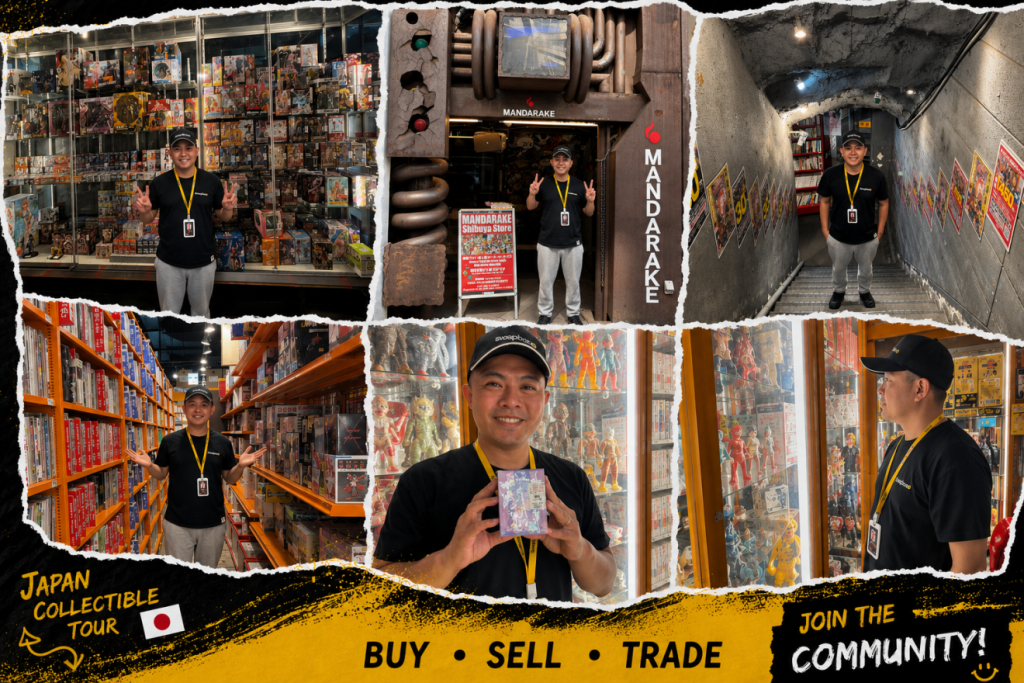
In Shibuya, the SWAPBOXO team continued its market visit at Mandarake Shibuya and Lashinbang Shibuya.
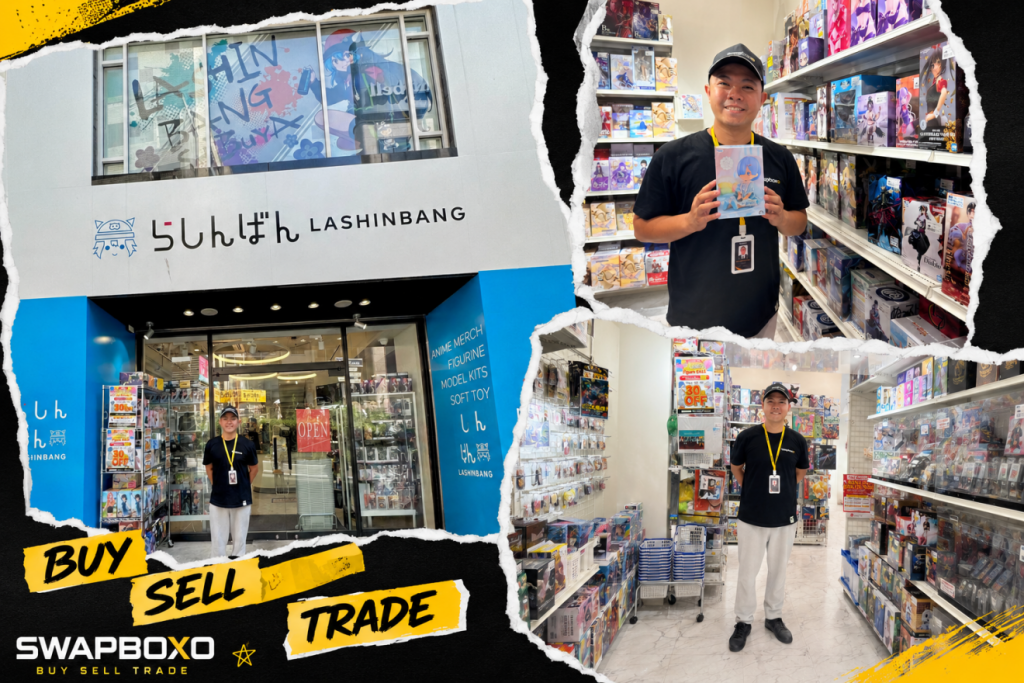
One important characteristic of the secondary collectibles market is that the market performance of the same item is not determined by the product alone.
Items within the same IP or product line may perform very differently depending on their edition, condition, market supply and consumer demand.
As a result, buyers in the secondary market often consider questions such as:
What is the current market price range for this item?
Are there comparable listings available for comparison?
Does the condition of the item meet my expectations?
Does the price align with my budget?
These are also questions that continue to shape SWAPBOXO’s thinking as a marketplace.
The value of a trading platform should not be limited to simply providing a place to publish listings.
More importantly, it should help buyers and sellers access more relevant market references.
For buyers, comparing more similar options can provide a broader understanding of different product conditions and market asking prices. For sellers, reviewing comparable items can also support more informed pricing decisions.
Making market information easier to discover and enabling more relevant choices to meet may be among the important forms of value a secondary collectibles marketplace can create.
Harajuku: Designer Toy Consumption Expanding Into More Lifestyle Spaces
After exploring Tokyo’s more traditional anime and collectibles districts, the team continued to Harajuku, visiting POP MART Harajuku Store, Kiddy Land and SPIRAL.
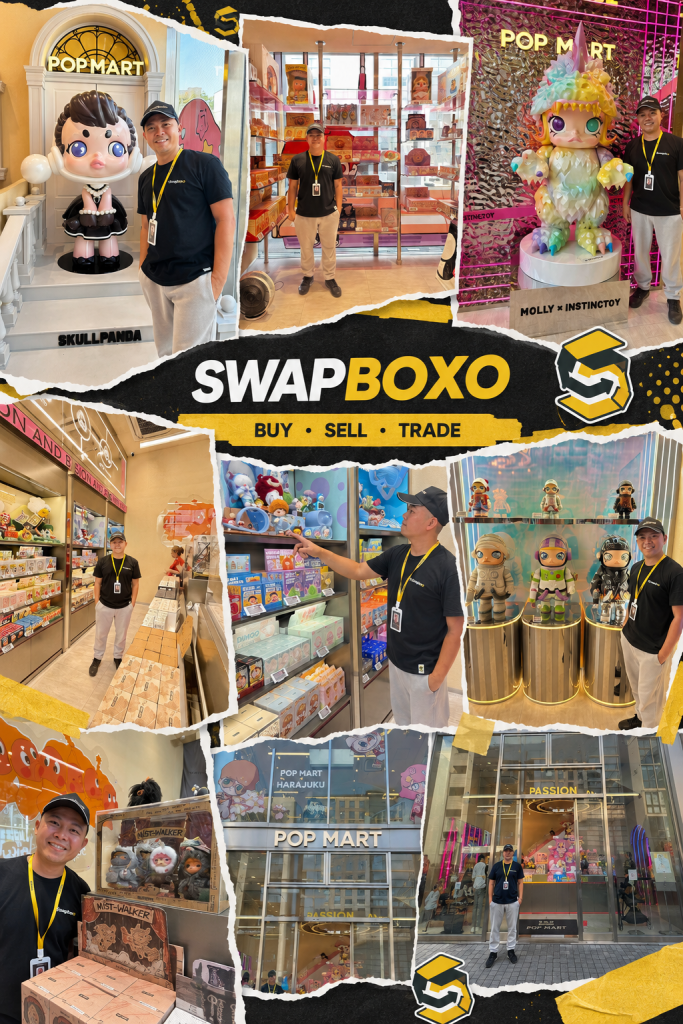
Compared with traditional collectibles stores, the consumer experience in these spaces reflects a stronger emphasis on youth culture, trend-driven consumption and lifestyle.
Designer toys are no longer limited to experienced collectors.
More young consumers are beginning their collecting journeys because of a character, a distinctive design language or an unexpected moment of discovery.
At the POP MART Harajuku Store, the team observed emerging trends in designer toy retail, including retail-space design, IP presentation and the overall consumer experience.
The experience of designer toy consumption is increasingly evolving beyond simply “buying a product” toward entering and engaging with an IP universe.
Meanwhile, in multi-brand and lifestyle-oriented retail environments such as Kiddy Land, consumers of different ages, interests and purchasing habits can encounter a wide range of IPs within the same commercial setting.
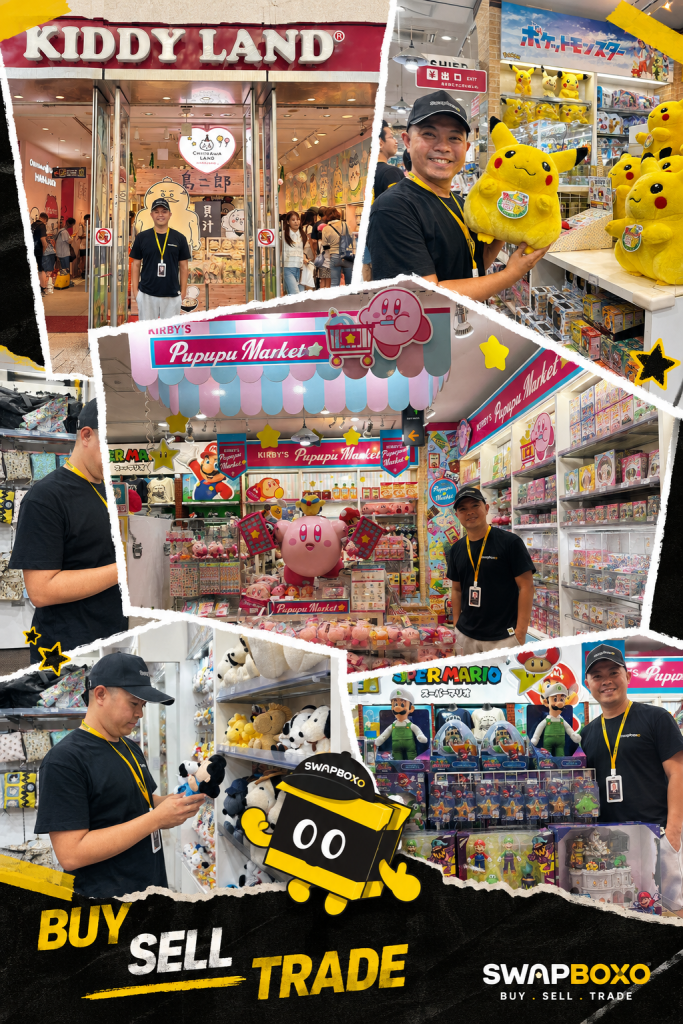
This demonstrates the continued potential for the collectibles market to expand.
Consumers may first encounter an IP through a new release and later enter the secondary market in search of an item they previously missed.
As collections grow, they may also sell duplicate items or trade pieces in search of something new.
The primary and secondary markets are not independent from one another.
Together, they form a broader lifecycle through which collectibles can continue moving between collectors.
SPIRAL: Where Collecting Connects With Design and Lifestyle
During the trip, the team also visited SPIRAL.
This demonstrates the continued potential for the collectibles market to expand.
Consumers may first encounter an IP through a new release and later enter the secondary market in search of an item they previously missed.
As collections grow, they may also sell duplicate items or trade pieces in search of something new.
The primary and secondary markets are not independent from one another.
Together, they form a broader lifecycle through which collectibles can continue moving between collectors.
SPIRAL: Where Collecting Connects With Design and Lifestyle
During the trip, the team also visited SPIRAL.
And how can every collectible that still holds value have the opportunity to begin its next journey?
Collecting Does Not Stop—The Journey Continues
From Akihabara to Nakano, from Shibuya to Harajuku, this visit brought the SWAPBOXO team closer to the diversity of Japan’s designer toy, anime and collectibles markets.
Each destination and business model has its own focus.
Some specialize in new releases. Some have deep roots in the secondary market. Others emphasize IP experiences or connect art, design and lifestyle.
Yet together, they point to one important idea:
The collectibles market is never a one-way journey.
An item can be purchased and kept.
It can later be sold as collecting interests evolve.
It can also be traded and eventually reach another collector who truly wants it.
This is also the value of collecting that SWAPBOXO believes in.
BUY. SELL. TRADE.
These are not simply three types of transactions. They represent the many possibilities through which collectibles can continue moving, changing hands and finding new meaning.
Looking ahead, SWAPBOXO will continue to follow developments across the global designer toy and collectibles markets, while exploring new products, new markets and new possibilities together with collectors around the world.